
England This Summer? Skip London. Here’s What’s Actually Worth Your Time
TL;DR: London is great. But England has places that are quieter, stranger, and honestly more memorable. Here are six worth booking this summer.
Let’s be real. If you’re planning a trip to England this summer, every article is going to push you toward London. The Thames. Big Ben. Buckingham Palace. A £20 pint somewhere near Covent Garden.
And look, I get it. London delivers. But if you’ve already done it (or if crowds genuinely stress you out), England has a surprisingly deep bench of places that most people walk right past.
These six destinations are different from each other in almost every way. But they share one thing: they actually feel like England. Not a postcard of it. Not a Tube map of it. The real one, with sheep on the road and pubs that close at 9 p.m. and locals who are slightly confused you found the place.
Here’s where to go.
If You’re Chasing Old-School Beaches That Feel Almost Foreign: The Isles of Scilly
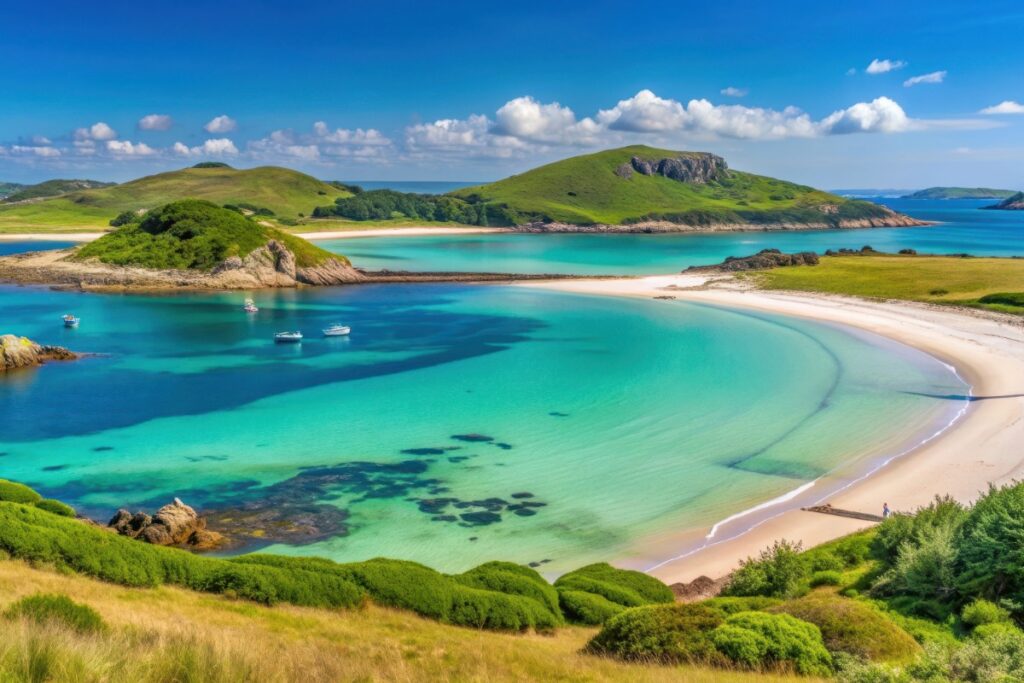
The Isles of Scilly sit 28 miles off the southwestern tip of Cornwall, and they feel nothing like mainland Britain.
There are around 2,200 people living across five inhabited islands. The water is genuinely turquoise. There are no traffic lights. The pace drops the second you arrive, and most visitors say it’s the closest thing to a Caribbean beach you’ll find in the UK without actually leaving it.
Getting there is part of the experience. You can fly from Land’s End in about 15 minutes, or take the Scillonian III ferry from Penzance (roughly 2 hours and 45 minutes). The ferry is popular, so book early, especially for July and August.
The biggest island, St. Mary’s, has the most accommodation and a good selection of restaurants. But if you can stay on one of the off-islands like Tresco or Bryher, do it. Tresco has the Abbey Garden, a subtropical garden that somehow grows plants from South Africa and New Zealand at this latitude. Bryher has Hell Bay, one of the most dramatic coastlines I’ve seen in Western Europe.
A good framing for this trip: fewer activities, more hours outside. The islands reward people who are happy to walk, eat seafood, and sit on a beach doing nothing in particular.
Practical note: Accommodation sells out fast for peak summer. Book 3-4 months ahead if you’re going in July or August.
If You Want Castles, Borderlands, and Zero Tour Buses: The Welsh Marches
The Welsh Marches is the stretch of England running along the Welsh border, roughly from Shrewsbury in the north down to Monmouth in the south.
It doesn’t have one famous attraction. It has about fifty smaller ones, spread across market towns, river valleys, and hills that change character every ten miles. That’s actually the point.
The landscape is some of the least-visited in England despite sitting between two countries. The A49 connects towns like Ludlow, Leominster, and Ross-on-Wye, and a road trip along this corridor takes you past a remarkable concentration of medieval castles, black-and-white timbered buildings, and working farms that genuinely haven’t changed much in decades.
Ludlow specifically deserves more attention. It’s a small market town with a 900-year-old castle, an independent food scene that punches above its weight (Ludlow Food Festival draws serious attention each September), and enough surrounding countryside to keep walkers busy for days.
The Marches also sits on the edge of the Offa’s Dyke Path, a National Trail that follows the ancient earthwork built by King Offa of Mercia around 784 AD to mark the boundary between England and Wales. You don’t have to walk all 177 miles of it. A single-day section near Knighton gives you a clear sense of why this borderland feels so different from the rest of England.
Honest caveat: This is not a destination for people who want a packed itinerary and restaurant reservations every night. It’s for people who like stumbling across things.
If You Want Clifftop Walks and Actual Wildness: Exmoor National Park
Exmoor sits across Devon and Somerset and covers about 267 square miles of moorland, wooded valleys, and North Devon coastline.
It’s smaller and less famous than Dartmoor or the Lake District, which works in your favour. The Valley of Rocks near Lynton has wild goats wandering the clifftops. The coastline between Lynton and Combe Martin is some of the highest sea cliffs in England, dropping over 300 metres in places.
The Exmoor Coastal Path follows much of this, and even a short section of it gives you views that take a few minutes to actually process. On a clear day you can see Wales across the Bristol Channel.
One thing Exmoor does that other national parks don’t: it has proper dark skies. It was designated as an International Dark Sky Reserve in 2011. On a clear night, the Milky Way is visible without any equipment. If you’re thinking about a night or two somewhere off-the-grid, Exmoor is a strong candidate.
The villages inside the park (Porlock, Dulverton, Dunster) are worth exploring too. Dunster has a castle that dates back to the 13th century and a working watermill. It’s the kind of place that sounds too picturesque to be real, and then you get there and it’s just… actually like that.
Who this is for: Walkers, people who travel for landscapes rather than cities, anyone who finds the Lake District a bit crowded in summer.
If You Want a City That Has Its Own Thing Going On: Norwich
Norwich is the regional capital of Norfolk and, genuinely, one of the most underrated cities in England.
It has the highest density of medieval churches of any city in Northern Europe outside of Rome. Thirty-two of them are still standing within the city walls. Many are now used as arts venues, community spaces, and cafes rather than active churches, which gives the city a particular kind of layered, lived-in quality.
The market in the city centre has been running continuously since the 11th century. The Norwich Castle Museum and Art Gallery sits above the market on a hill and houses one of the best collections of Norwich School paintings in the world. This was a landscape painting movement specific to Norfolk that flourished in the early 1800s, and seeing the actual works in context of the city they depicted is worth the trip on its own.
The food scene is genuinely good and not particularly tourist-focused. The independent restaurants along Unthank Road and around the Golden Triangle neighbourhood feel like places that exist for locals first.
Norwich is also 2 hours from London by train, making it a realistic option for a 2-3 night addition to a UK trip.
The case for Norwich in one sentence: It’s a city that’s been doing its own thing for a thousand years and has no particular interest in performing for visitors. That’s refreshing.
If You Want to Actually Slow Down: The Kennet and Avon Canal
The Kennet and Avon Canal runs 87 miles from Bristol to Reading, passing through Bath, Bradford-on-Avon, Devizes, and Newbury along the way.
The idea here is simple: hire a narrowboat and move at 4 miles per hour for a few days. No agenda, no check-in times, no particular destination. You stop when you find somewhere you like, pull the boat over, and stay there.
Narrowboat hire is more accessible than most people assume. Boats typically sleep 2-10 people and can be operated without any prior experience after a 30-minute handover from the hire company. Prices vary by season and boat size, but a 4-berth boat in summer typically runs around £1,200-£1,600 for a week through operators like Foxhangers Canal Holidays or Windlass Boating.
The canal passes through some quiet, genuinely beautiful English countryside. The Caen Hill Flight near Devizes is one of the steepest flights of locks in the country, 29 locks in a row over 2 miles. Working through them takes about half a day and is oddly satisfying.
Bath is worth stopping in for a night, obviously. But the stretches of canal between towns are where the trip actually happens. No phone signal in places. Herons on the bank. The sound of the engine and not much else.
Who this is for: Anyone who needs a genuine break from pace. Also couples, small groups of friends, families with kids old enough to handle a boat without panicking.
If You Want to See the Milky Way With Your Own Eyes: Northumberland
Northumberland is about as far north as England gets before it becomes Scotland. It borders Scotland to the north, the North Sea to the east, and shares its southern edge with County Durham.
It’s the least densely populated county in England, with roughly 62 people per square kilometre. For comparison, Greater London sits at around 5,700. That number matters because it explains the dark skies.
Northumberland International Dark Sky Park covers 1,500 square kilometres of the Northumberland National Park and adjoining Kielder Water and Forest Park. It’s one of the largest dark sky preserves in Europe. On a clear night, around 2,000 stars are visible to the naked eye. There are regular stargazing events run through Kielder Observatory from spring through autumn.
But Northumberland isn’t just about the sky. Hadrian’s Wall cuts across the county for 73 miles, built by the Romans starting in AD 122. The section near Housesteads Fort gives you the clearest sense of scale, and walking along the ridge on a clear day is genuinely memorable. The Northumberland coast is equally good: long, empty beaches at Bamburgh and Alnmouth with the kind of space that feels strange if you’re used to crowded summer beaches.
Alnwick Castle has been used as a filming location for the Harry Potter series (it stood in for Hogwarts in the first two films), if that’s relevant to your travel party.
Honest take: Northumberland asks something of you. It’s not the easiest place to get to. But that’s exactly why it still feels like somewhere that hasn’t been overexposed.
Frequently Asked Questions
When is the best time to visit England outside of London? June through August gives you the longest days and warmest weather, though it’s also peak season. May and September are worth considering for fewer crowds and prices that are 10-20% lower on accommodation. The Isles of Scilly and Northumberland are best in summer for weather reasons. The Welsh Marches and Kennet and Avon Canal work well in spring or early autumn.
How do I get around England without driving? Most of these destinations are reachable by rail to a nearby hub, then a local bus or taxi from there. Norwich has a direct train from London Liverpool Street. Exmoor and the Isles of Scilly require more planning. The Welsh Marches are easiest with a rental car. National Rail’s journey planner covers most UK rail routes.
Is England expensive to travel in? It can be. Accommodation is the main cost, especially in summer. Budget around £80-£150 per night for a comfortable mid-range option in most of these areas, less in Northumberland, more near Bath or the Isles of Scilly. Food costs vary widely: a pub meal typically runs £12-£18, a restaurant £25-£40 per person.
Are these destinations good for solo travellers? Yes, particularly Norwich, the Welsh Marches, and Northumberland. Solo travel on a narrowboat is technically possible but works better with two people for the locks. The Isles of Scilly are excellent solo if you’re comfortable with small, tight-knit communities.
The Bottom Line
London is a city worth seeing. But England beyond it is quieter, cheaper, and in a lot of ways more interesting.
The six places above aren’t trying to compete with London. They’re doing completely different things. Old islands. Border country. Dark skies. Slow canals. Medieval cities. Wild coastlines. Each one gives you something the capital can’t.
Pick one. Book it earlier than you think you need to. Go.
If you want help planning any of these trips or want a customised England itinerary that skips the obvious, reach out to Travelista Travels. We plan the kinds of trips that actually feel different when you look back on them.