
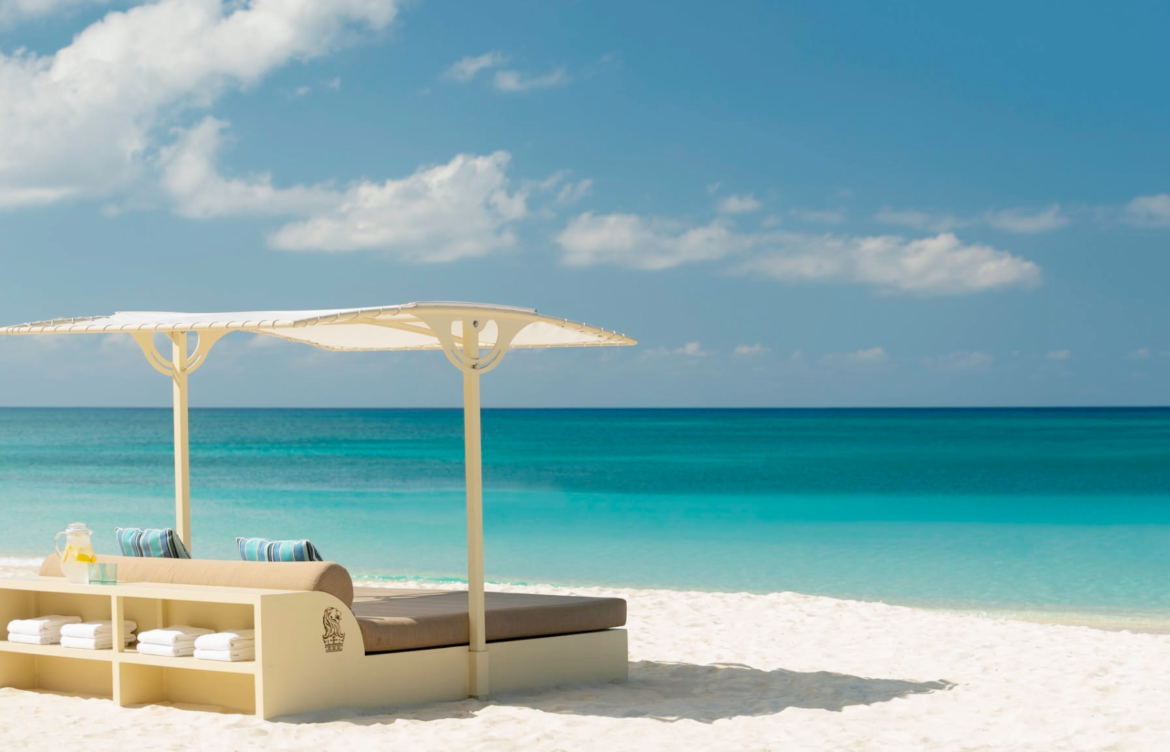
Cayman Islands Luxury Travel: My Honest Guide to Grand Cayman
Why I keep sending clients back to the same 76 square miles of paradise
People ask me all the time why Cayman Islands luxury travel is worth the price tag. Fair question. There’s no shortage of Caribbean islands with white sand and blue water.
Here’s my answer: Grand Cayman is easy.
No visa hassle for most travelers. A short flight from most US hubs. English is the official language. And a level of polish you don’t always get in the Caribbean, without losing that laid-back island feel.
I’ve booked this island for honeymooners, families, solo divers, and groups of friends who want to do nothing for a week. It works for all of them. That’s rare.
This guide covers where to stay, what to do, where to eat, and the stuff I only know because I’ve planned dozens of these trips myself.
Where to stay: my picks for Grand Cayman hotels
Grand Cayman hotels range from big-brand luxury to small boutique spots where the staff knows your name by day two. Here’s where I actually send people.
The Ritz-Carlton, Grand Cayman.
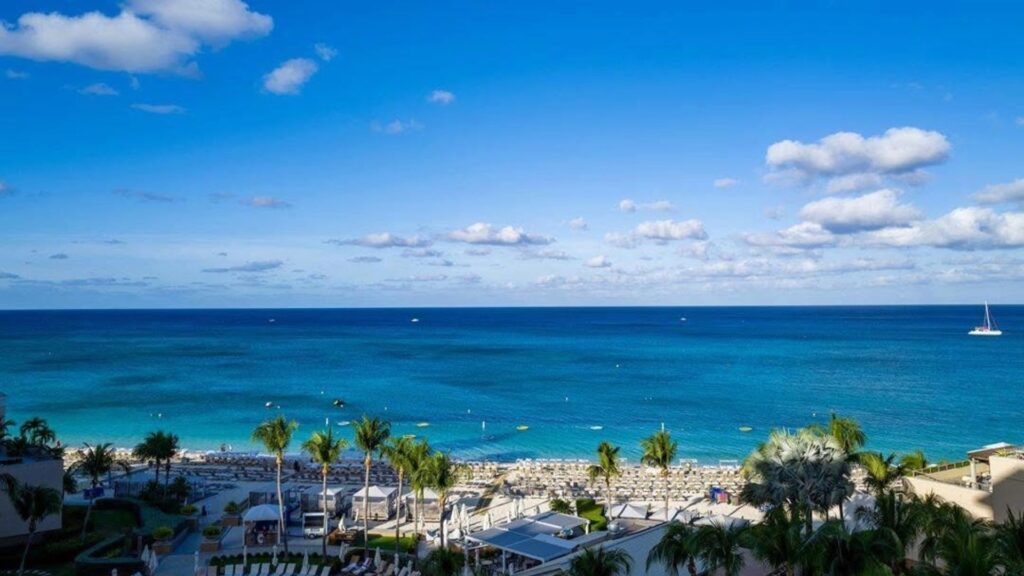
This is the classic pick, and for good reason. It sits on Seven Mile Beach and stretches all the way to the North Sound, so you get two very different water views from the same property. The rooms are spacious, the service is exactly what you’d expect from the name, and the dining lineup is honestly one of the best on the island. Blue by Eric Ripert is here, and it’s the only AAA Five Diamond restaurant in the Caribbean. If you want a splurge dinner, this is it.
Who it suits: first-time visitors who want a big resort with everything on-site, honeymooners, food lovers.
Kimpton Seafire Resort + Spa.
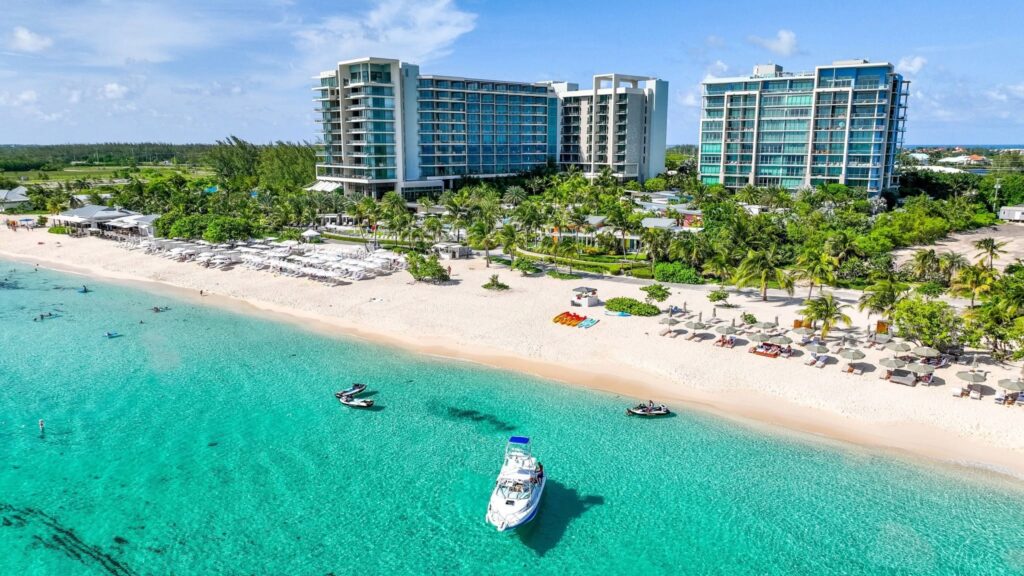
This one has a beach-club energy that I love. It’s less formal than the Ritz, but still very much a five-star stay. Guests can join morning yoga or beach bonfires, and it’s a five-minute barefoot walk to the water and the restaurant row nearby. Rooms range from cozy kings to full suites, so it flexes for couples and families both.
Who it suits: travelers who want luxury without the stiffness. Great for couples and small families.
Palm Heights
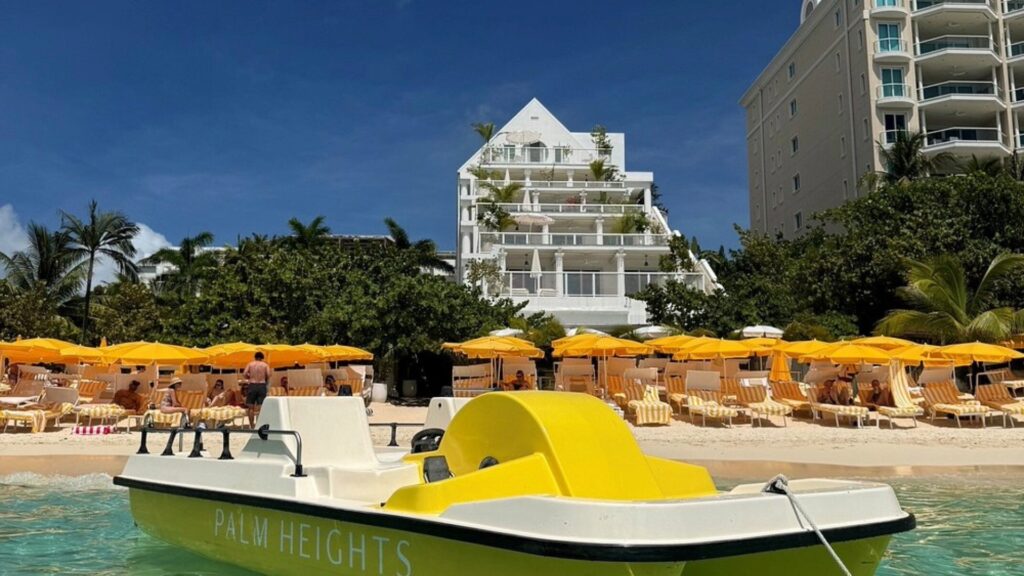
Smaller, design-forward, and quietly one of my favorite recommendations. It’s less about scale and more about feel. Think curated interiors, a relaxed pace, and a crowd that skews a bit more design-savvy and low-key. It’s the property I recommend when someone tells me they’re “not really resort people.”
Who it suits: couples, first-time visitors who want boutique over big-brand, anyone who wants Seven Mile Beach without the crowds of a mega-resort.
Grand Hyatt Grand Cayman

Brand new to the island, and it’s a big one. Nearly 400 rooms, several pools, multiple beachfront restaurants, and a destination spa with ice therapy and indoor-outdoor treatment rooms. It’s ten minutes from the airport and steps from the sand.
Who it suits: travelers who want the newest full-service resort on the island, groups who want lots of dining options without leaving the property.
Hotel Indigo Grand Cayman
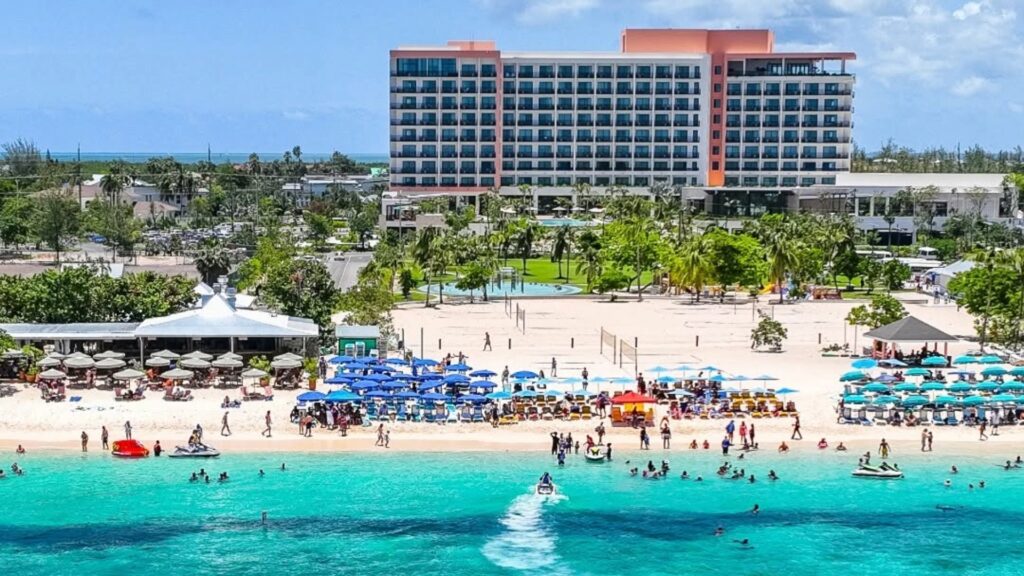
The first Hotel Indigo in the Caribbean, and it feels more like a lifestyle hotel than a traditional beach resort. The design leans into local art and texture, and there’s a rooftop lounge with water views that’s worth a sunset visit even if you’re not staying there.
Who it suits: design-forward travelers, younger couples, anyone who wants something a little different from the standard beach resort look.
Cayman Islands all-inclusive resorts: what to actually expect
I’ll be straight with you here, because a good advisor tells you the truth, not just what ranks well on Google.
Grand Cayman isn’t a true all-inclusive destination the way Mexico or the Dominican Republic is. There are only a couple of properties on the island that offer the classic one-price, everything-included model. The main one is the Wyndham Reef Resort on the East End, which includes food, drinks, and activities in one package.
What you’ll find a lot more of are “all-inclusive style” resorts. These have multiple restaurants, bars, and activities on-site, so you can genuinely stay put for a week and never run out of things to do or eat. You’re just paying as you go instead of one flat rate. Kimpton Seafire and the Ritz-Carlton both work well this way.
My honest take: if you want a resort where you never have to think about logistics, ask me about Wyndham Reef. If you want the island’s best restaurants and a bit more freedom, go with an all-inclusive-style stay and let me build the itinerary around it.
Seven Mile Beach: the heart of it all
Cayman Islands 7 Mile Beach is the reason most of my clients book this trip in the first place. It’s not actually seven miles, closer to six, but nobody’s counting when the sand is this soft and the water is this calm.
What makes it different from other famous Caribbean beaches is how usable it is. Most of the shoreline is public, the water stays shallow and clear for a long way out, and there’s almost no surf to fight. That makes it a genuinely good beach for kids, for swimmers who aren’t confident, and for anyone who wants to float for three hours with a book they never open.
Sunset walks here are a ritual for me at this point. Start near Camana Bay and keep going.
Things to do in Cayman Islands beyond the beach
Here’s where the island earns its adventure-travel reputation, not just the luxury one.
Stingray City: This is the single most requested activity I book for Cayman. You wade or snorkel in shallow, sandy water while friendly southern stingrays glide around you. It sounds like a gimmick until you’re standing there with a stingray brushing past your leg and you understand why people fly in just for this.
Diving and snorkeling the reefs: Cayman has some of the clearest water in the Caribbean, with visibility that regularly hits 100 feet. Bloody Bay Wall off Little Cayman is a bucket-list dive site if you’re certified. For snorkelers, there are reefs close enough to shore that you don’t need a boat.
Camana Bay: This is the island’s walkable town center, and it’s grown into a real hub for shopping, dining, and evening entertainment. I send almost every client here for at least one dinner, even if they’re staying elsewhere on the island.
Georgetown and the local side of the island: Rent a car for a day and drive past the resorts. The Cayman Crystal Caves, the botanic park, and the quieter beaches on the East End show a slower, more local version of the island that a lot of visitors miss entirely.
Where to eat and drink
Food is where Grand Cayman really separates itself from a lot of Caribbean destinations. This is not an island of buffet lines.
Blue by Eric Ripert at the Ritz-Carlton is the splurge. Tasting menus built around local seafood, a wine cellar with more than 700 bottles, and service that matches the price. Book this early. It fills up fast.
Grand Old House is my pick for a celebration dinner. Oceanfront deck, sunset views, white-linen service, and an award-winning wine list. It’s the kind of place where the setting does half the work before the food even arrives.
Agua, near the Camana Bay harbor, is great for something a little more relaxed but still elevated. Their ceviche and crudo are some of the best on the island, and it’s an easy stop after a boat charter.
Abacus brings steakhouse and seafood together with a lively, urban energy, plus one of the better cocktail bars in Camana Bay.
Mizu is my go-to when clients want sushi. Waterfront setting, the island’s only teppanyaki grill, and a brunch that’s worth planning around.
For something low-key, Union Grill and KARoo both do a great job with grilled seafood and steaks in a more casual setting, without cutting corners on quality.
Insider tips I give every client
- Book Blue by Eric Ripert and any Stingray City tour the moment your trip is confirmed. Both sell out.
- Rent a car for at least one day, even if you’re staying beachside the rest of the trip. The East End is worth the drive.
- Visit Seven Mile Beach at sunrise once. It’s a different island before the crowds show up.
- Ask your hotel about direct flights to the Sister Islands, Cayman Brac and Little Cayman, if diving is a priority. It’s a short hop and a completely different pace.
- Skip renting a car if you’re only staying in the Seven Mile Beach and Camana Bay area. Taxis and resort shuttles cover it fine.
Practical planning advice
Most US, Canadian, and EU travelers don’t need a visa, just a valid passport and a return ticket. The dry season, roughly November through April, is the most popular and the most expensive. If you want lower prices and don’t mind the odd afternoon shower, late spring and early fall are quieter and still gorgeous.
This is where a good travel advisor earns their keep. I know which room categories at the Ritz actually face the water, which nights Grand Old House has availability without a three-week wait, and how to string together a week that mixes a beach resort with a night or two on Little Cayman for the divers in the group.
If you’re weighing Grand Cayman hotels and can’t decide between boutique and big-brand, or you’re trying to figure out if an all-inclusive-style stay makes more sense than paying as you go, that’s exactly the kind of thing I sort out for a living. Reach out to The Chica Travelista, and let’s build the trip.